Completion Is More Than the Last Roll of Turf
Turf field handover connects construction to daily operation. A field can look finished while the owner still lacks the records, training or inspection results required to manage it.
The closeout plan should be established before the final week. Schools, municipalities and private facilities need to know who accepts the work, which documents are required and what must be complete before use. The contract and project specifications govern the actual acceptance process.
Create One Closeout Register
List each required deliverable, the responsible party and its status. Include the designer, general contractor, turf installer, product suppliers and owner where appropriate.
A register helps distinguish a missing document from unfinished physical work. It also prevents a maintenance manual, warranty letter or test report from being assumed to be someone else's responsibility.
Review the Finished Field Against the Approved Scope
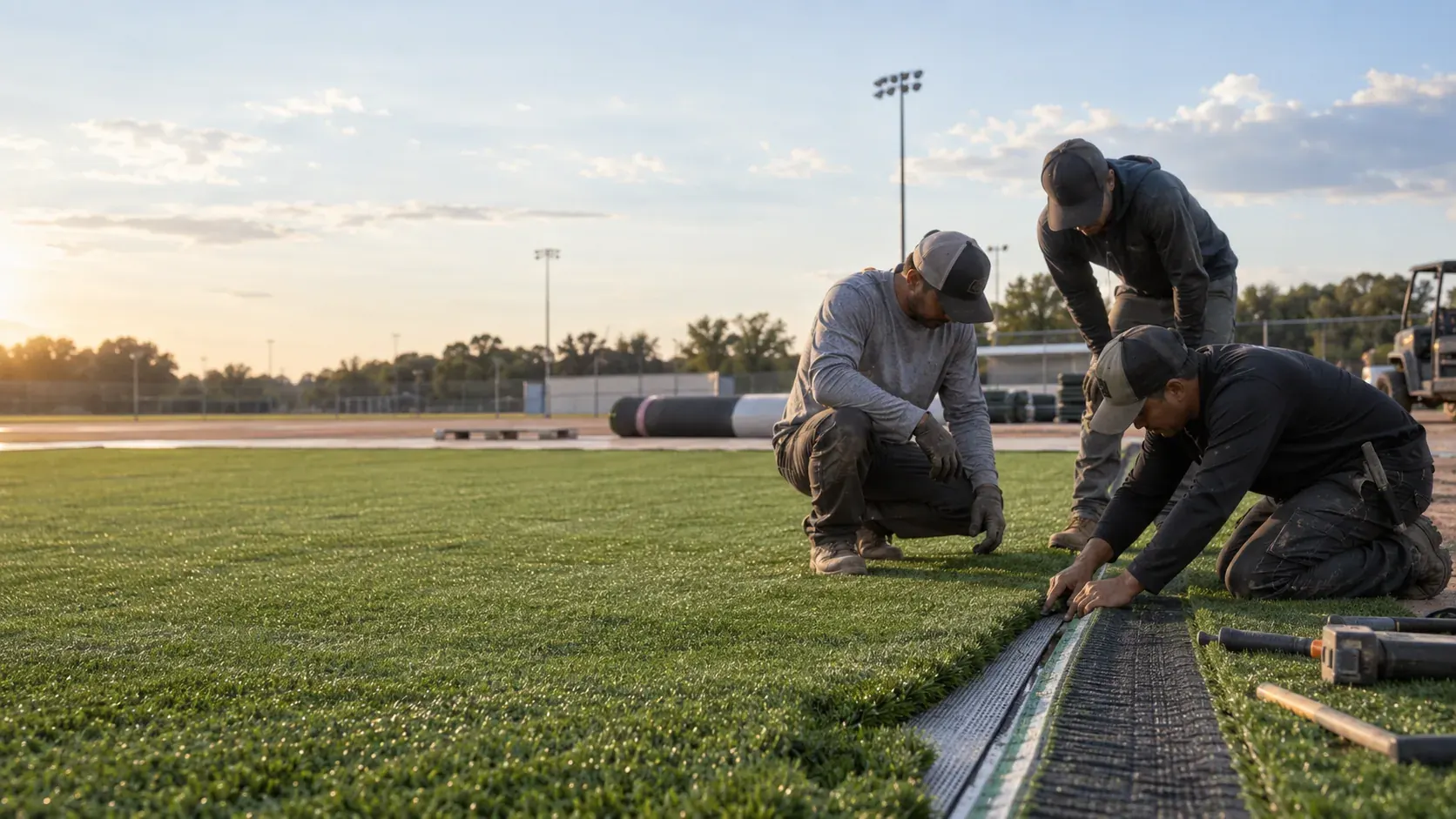
The walkthrough should address the entire assembly and its interfaces, not just visible turf. Review lines and graphics, seams, perimeter transitions, utility access, drains, fencing interfaces and equipment locations.
Record issues with clear locations and photographs. Assign a responsible party and completion date to each punch item. Determine which items affect opening and which can be addressed under the project's agreed process.
Collect Required Verification Records
Testing requirements differ by project and application. The owner should receive the records specified for that field, including any required base, drainage or surface-performance verification.
Confirm who performed the work, what area or assembly was evaluated and whether unresolved findings remain. A report for a different product or another facility is not evidence for the installed field.
The Synthetic Turf Council technical guidelines offer industry references. They do not replace the project's contract, specified standards or acceptance criteria.
Document What Was Actually Installed
Collect product identification, turf and infill information, pad details where applicable, approved substitutions and relevant as-built records. Record drainage locations and access points so future maintenance does not depend on memory.
Keep the installed layout for lines and graphics. That information can make later seam or patch repair and field modifications easier to scope.
Turn Maintenance Guidance Into a Working Plan
The facilities team should understand the correct equipment, permitted products, inspection tasks and reporting procedure. Identify who handles debris, infill attention, high-use areas and drainage checks.
A manual placed in a folder is not the same as staff training. Document the training and ensure the people doing the work can access the instructions. Use artificial turf field maintenance as a planning reference.
Clarify Warranties and Contact Responsibilities
Separate manufacturer material coverage from installation workmanship and other construction responsibilities. Collect the actual documents, registration requirements and claim contacts.
Explain how the owner reports a concern and what records are needed. Avoid treating the warranty term as a promise that every future problem will be corrected at no cost. Read understanding turf warranties.
Agree on Opening and Operating Rules
Identify who authorizes use after closeout. Confirm restrictions related to footwear, vehicles, events, protective coverings and maintenance equipment. Share the rules with coaches, outside renters and event teams.
A field with frequent community use needs a clear process for reporting damage. Establish that process before the first tournament rather than after an incident.
Does the final walkthrough replace testing?
No. Visual review and required testing serve different purposes.
Can a field open with punch items remaining?
That depends on the contract, the nature of the items and the responsible parties' acceptance process. Do not assume every outstanding item is minor.
Finish With an Operable Facility
Diamond Field Systems includes closeout coordination in the discussion of a defined sports field construction scope. Share the owner's documentation and training requirements when you request a quote.