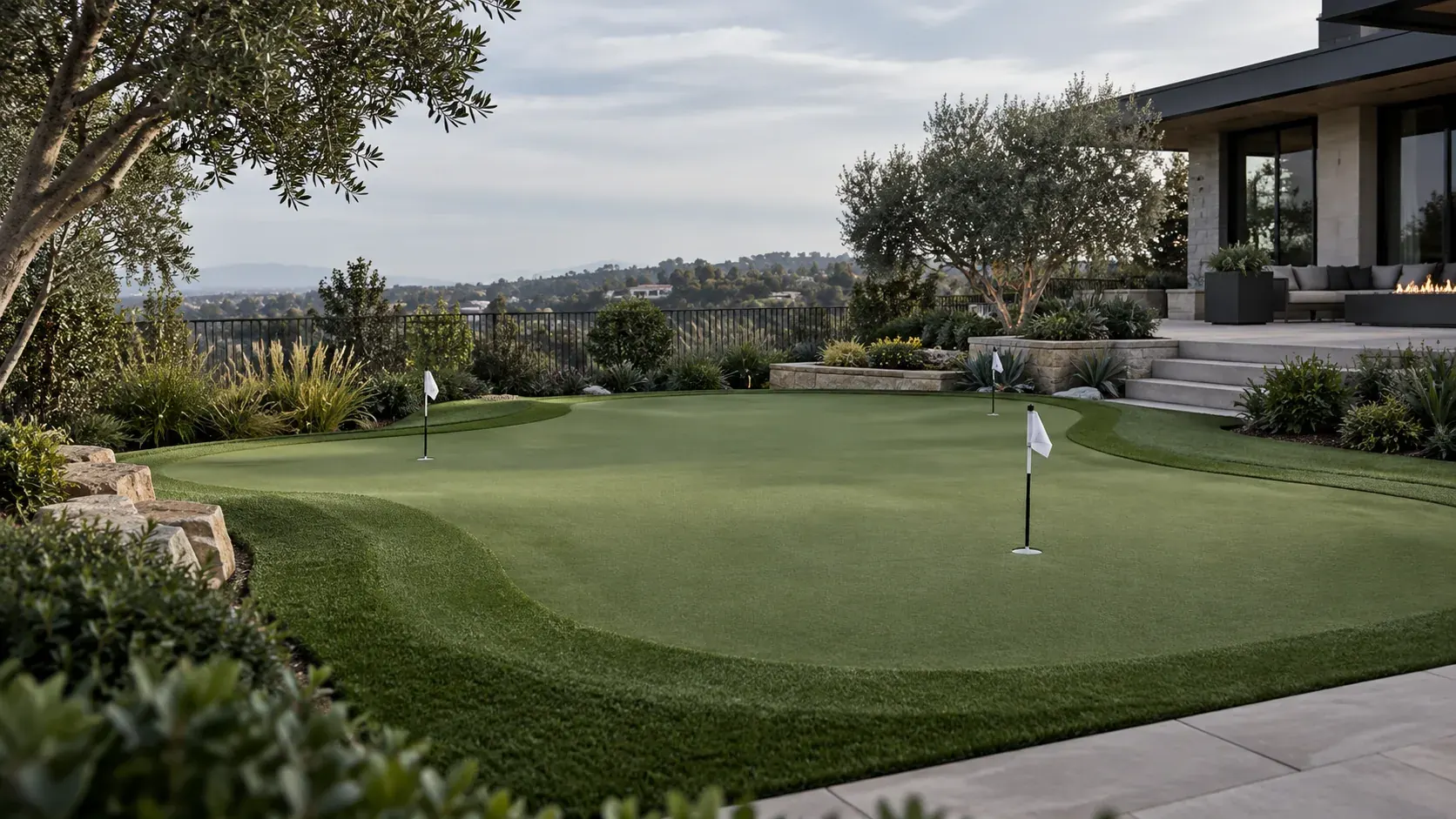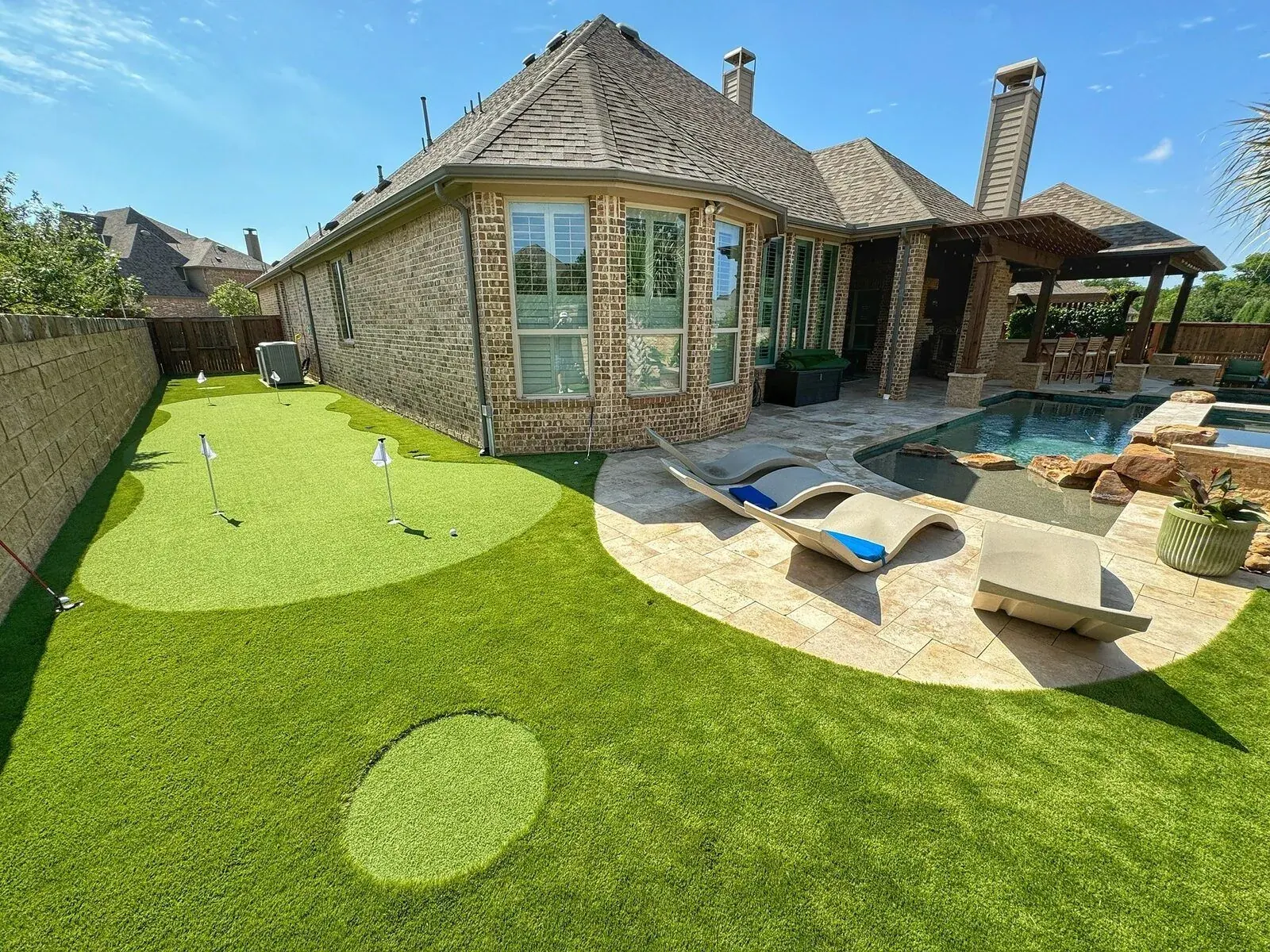
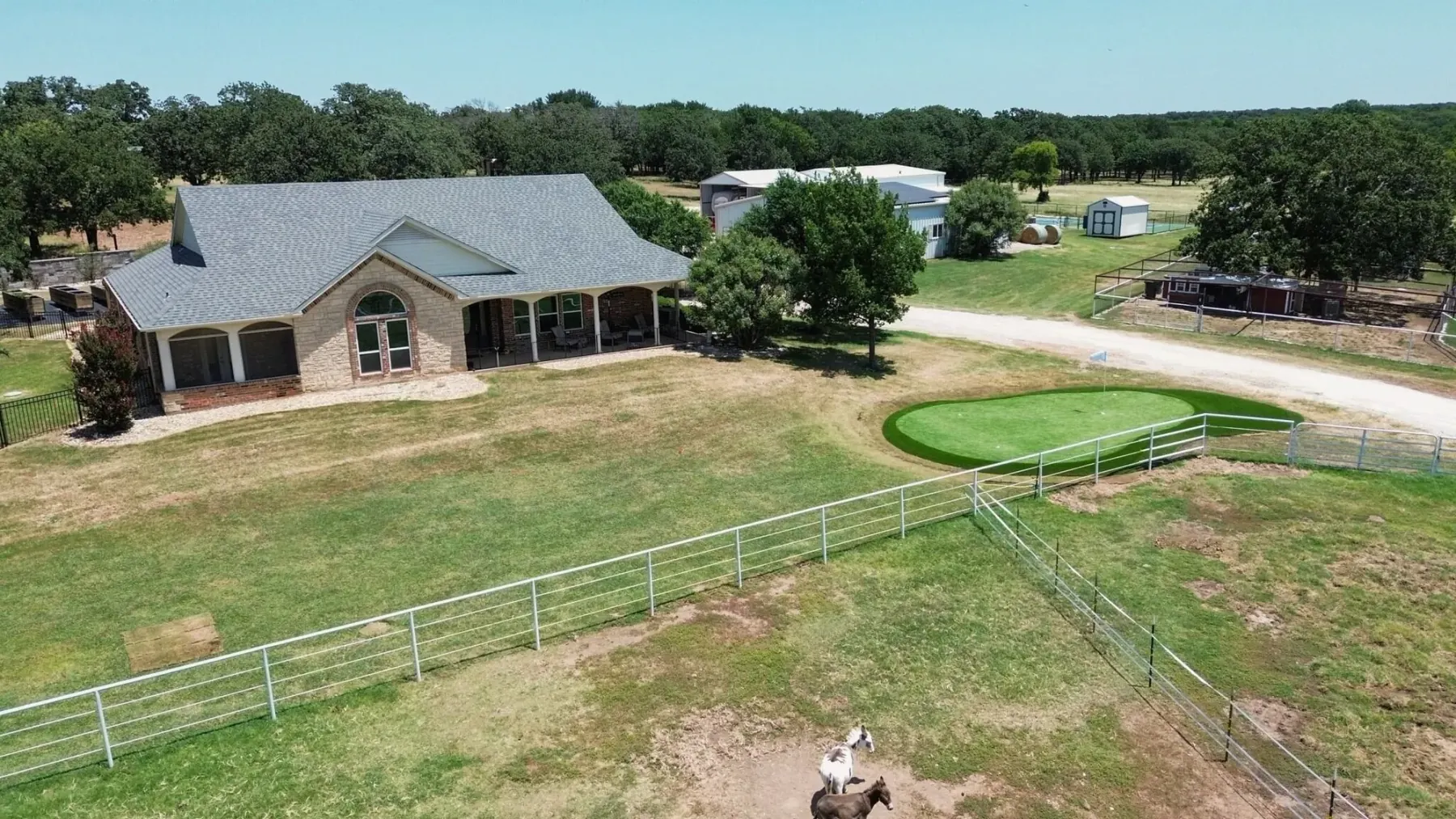
Start With the Shots You Want to Practice
A backyard chipping green is not simply a putting green with a longer fringe. The design needs to connect the hitting positions, carry distances, landing area and surrounding property.
Some owners want short chips from a few steps off the green. Others expect longer approach shots. Those goals can require different space and surface characteristics. Define the intended practice before selecting a product or drawing an attractive outline.
Map the Full Practice Envelope
Measure beyond the proposed green. Include hitting positions, the ball's intended path, likely misses and the space behind the target. Buildings, pools, glass, neighboring properties and public areas can restrict the layout.
Do not assume a backyard is suitable for every shot distance. The owner and project team should establish appropriate use and any professionally designed containment needs. A turf installation does not by itself make a hitting area safe.
Distinguish Putting Roll From Ball Reception
A surface that produces a preferred putting roll may not receive chip shots in the way the owner expects. Turf, infill, underlayment and the supporting assembly can influence performance.
Ask the supplier to explain the proposed system's intended use. Where feasible, evaluate a relevant installed example or sample arrangement. Avoid promising natural-green ball behavior from a product chosen only for its appearance.
Our guide to putting green playability covers contours and roll. Chipping adds another performance question to that design.
Leave Enough Useful Landing Area
A dramatic shape can leave very little practical target space. Identify the landing zones for the planned shots before adding narrow lobes, steep contours or closely spaced cups.
The design should provide a useful progression of practice rather than several awkward targets. Consider where balls finish after landing and whether the owner can repeat the intended shot without changing the entire setup.
Design Hitting Areas for Repeated Use
Natural grass, a compatible mat and synthetic chipping turf have different maintenance and replacement needs. The expected frequency of shots matters.
A replaceable hitting surface can be practical, but its support, stability and transition need to be planned. Identify whether the owner expects to strike from one location or rotate among several. Do not assume an ornamental fringe is intended for repeated club contact.
Keep Cups and Contours Playable
Cup locations should work for both putting and the intended approach practice. Avoid placing every cup at an extreme break simply to make the green appear interesting.
Ask how cups can be maintained or replaced and whether the design allows variation. The final plan should show the relationship between landing areas, slopes and cup positions before the base is shaped.
Integrate Drainage and the Surrounding Yard
The green's contours must also work with the property's water path. Surrounding beds and patios should not wash soil onto the surface. Hitting locations need usable access and appropriate support.
Construction access, excavation and the selected assembly influence price. Review custom putting green cost before comparing a practice system with a basic decorative green.
Questions Worth Resolving Before Approval
- Which shots and distances will the space support?
- Where will the owner stand?
- What happens to likely misses?
- Which surface system is proposed for ball reception?
- How will hitting areas be repaired?
- Which contours remain useful for putting?
- What maintenance does the complete assembly need?
Can an existing putting green be converted for chipping?
Possibly, but the existing system, available space and surrounding exposure need assessment. A fringe change alone may not produce the desired behavior.
Does a larger green always practice better?
No. Useful landing space and well-chosen shot positions matter more than area alone.
Build Around Your Short Game
Diamond Field Systems scopes custom putting greens for the way clients want to practice. Include your intended shots, available yard dimensions and surrounding features when you request a quote.